
Best Practices for Lubricant Use in Food & Beverage Processing
Food-grade lubricant management is vital in food and beverage manufacturing to prevent contamination, protect equipment and comply with safety standards. This blog explains what food-grade lubricants are, why correct storage and application matter, how to implement best practices, and how modern systems and tools can enhance operational efficiency and sustainability.
Introduction
In the food and beverage industry, production lines depend on complex machinery operating around the clock. While most people focus on ingredients, packaging or quality control, one critical component often goes unnoticed: lubricant management. The way lubricants are selected, stored, handled and applied can have a direct impact on product safety, machine life and operational efficiency. Poor practices lead to contamination risks, equipment failure and higher operating costs. In contrast, optimised lubricant management supports compliance with stringent food safety standards and helps companies meet sustainability goals.
This guide explores why lubricant management matters, what food-grade lubricants are, and how best practices can transform your maintenance strategy.
What are Food-Grade Lubricants and why they matter
Food-grade lubricants are specially formulated to be safe for use in food and beverage environments. Unlike standard industrial lubricants, they are designed to be:
- Odourless and colourless
- Harmless upon incidental contact with food
- Compliant with food safety standards such as NSF or USDA approvals
Using the wrong lubricant in a food plant can lead to contamination, product recalls and regulatory breaches. Food-grade lubricants mitigate these risks by ensuring that, even if a small amount contacts the product, it will not pose a health hazard
Food-grade products are classified into categories such as H1 (safe for incidental contact) and H2 (unlikely to contact food but still food-safe), helping maintenance teams match the lubricant to the application correctly.
The role of Lubricants in Safety and Performance
Lubricants do more than reduce friction. In food and beverage plants, they play several essential roles:
- Protect machinery components from wear, corrosion and overheating
- Reduce energy consumption by lowering friction
- Help maintain consistent product quality and uptime
- Support sustainability goals by reducing waste and extending lubricant life
High-quality food-grade lubricants also contribute to waste reduction and energy efficiency, which are increasingly important in environmentally conscious manufacturing.
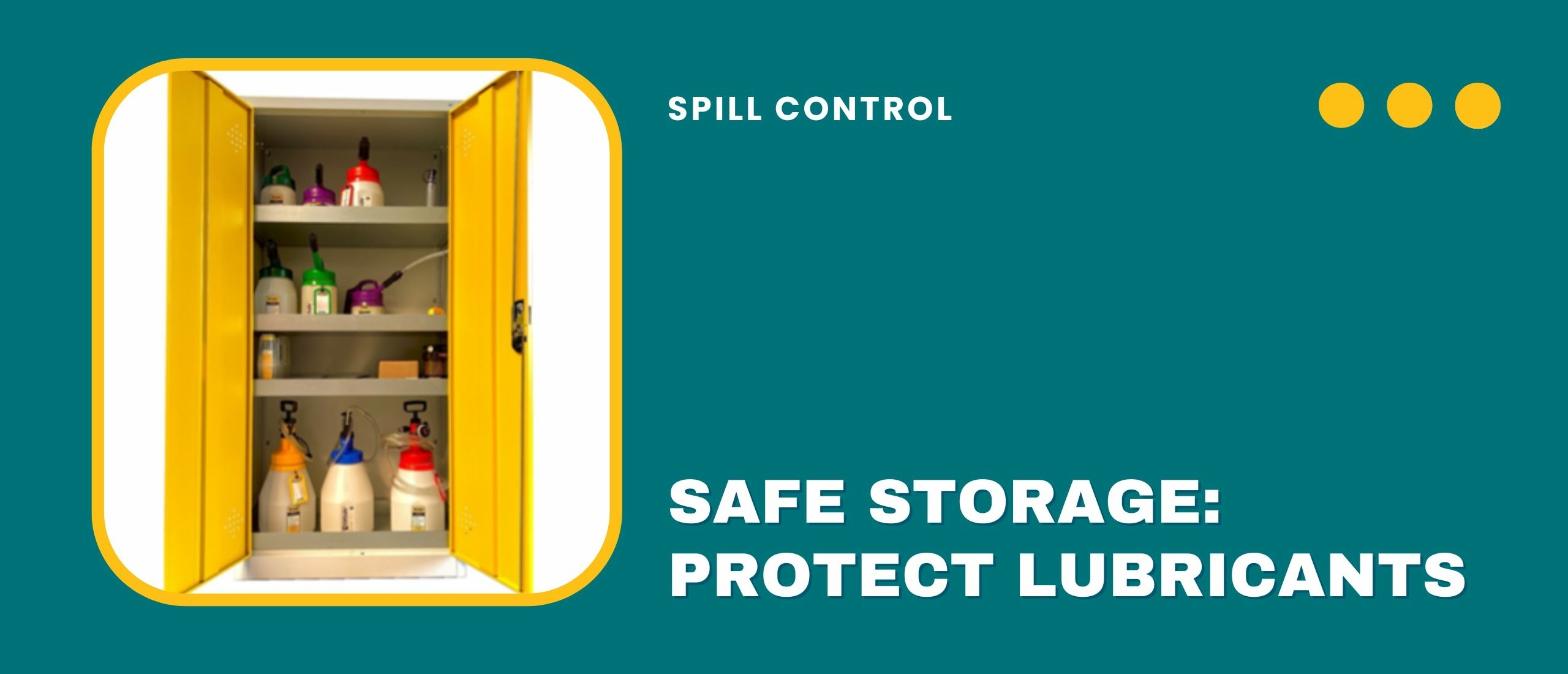
Storage and Handling Best Practices
Effective lubricant management begins long before application. Proper storage and handling are crucial to maintain lubricant quality and prevent contamination:
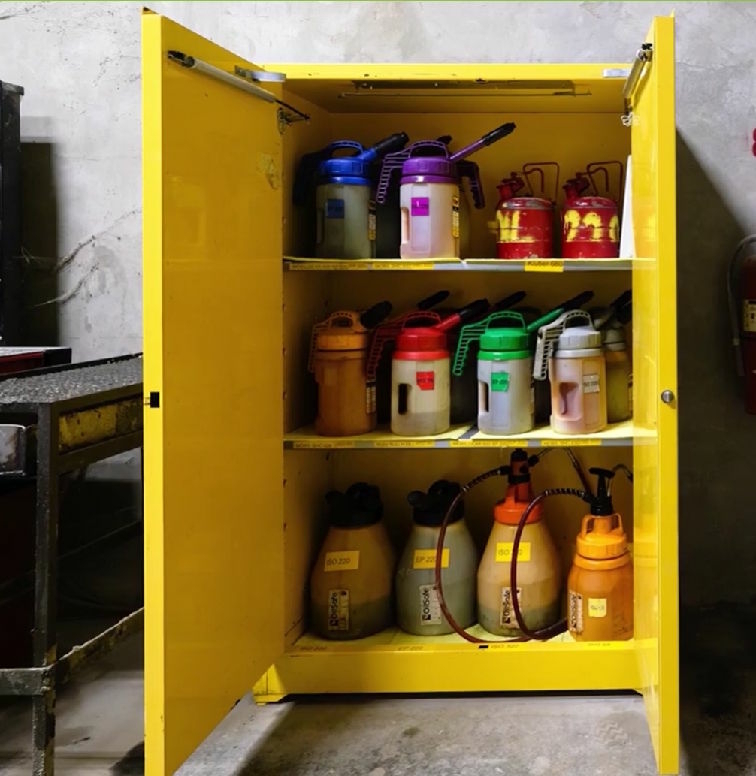
Clear labelling and segregation
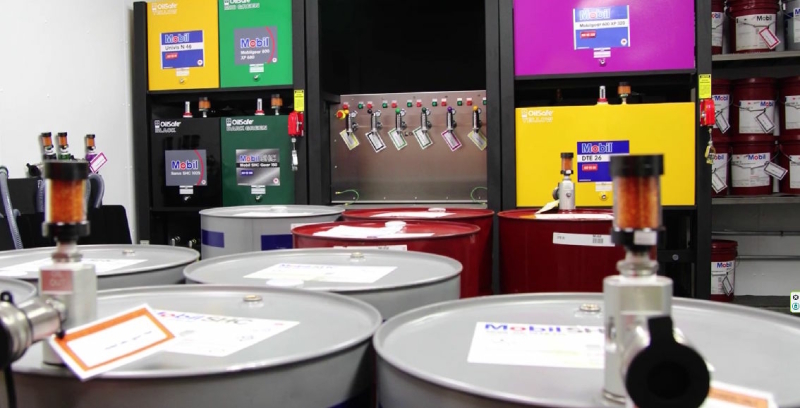
Keep food-grade and non-food-grade products clearly labelled and stored separately to avoid mix-ups. Use colour-coding and additional visual cues for accessibility.
Temperature and climate control
Store lubricants in temperature-controlled areas to preserve their chemical integrity and extend shelf life.
First-in, first-out ( FIFO ) inventory
Using a first-in first-out system ensures older stock is used before newer batches, reducing waste and maintaining product performance.
Cleanliness control
Use sealed containers, breathers and filtration systems to keep lubricants free from dust and moisture. Contaminants can significantly reduce lubricant effectiveness and accelerate machinery wear
Precision in Lubricant Application
Once lubricants are on site, accurate application is essential:
- Match lubricant type to application: Use H1 lubricants for areas directly above food products and H2 for ancillary equipment.
- Use appropriate tools: Colour-coded grease guns and dedicated top-up containers minimise the risk of errors
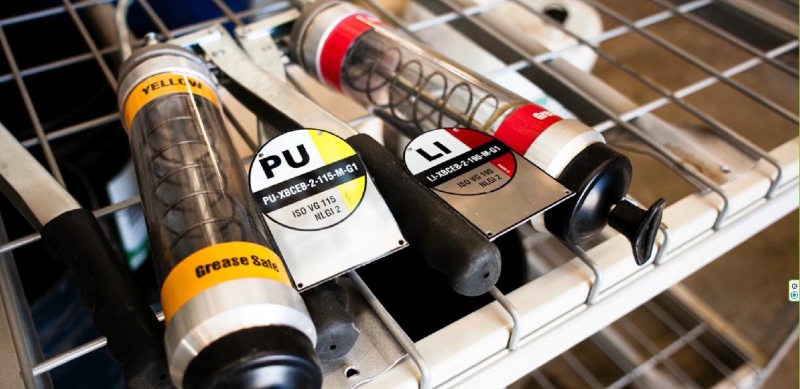
- Train staff: Technicians must understand not only how to apply lubricants, but why accuracy matters. A misplaced lubricant can compromise both machine life and food safety.
Automation and Modern Lubrication Systems
Manual lubrication has limitations, especially in high-speed production environments. Automated lubrication systems offer several advantages:
- Consistent and accurate delivery of lubricant to critical points
- Reduced manual intervention and thus lower risk of contamination
- Better hygiene and safety with less human contact on machines
- Improved uptime and lower maintenance costs due to regular, controlled lubrication
Manufacturers of these systems also support food-grade applications, ensuring compatibility with NSF-registered products.
Aligning Lubricant Management with Sustainability
Sustainability is no longer a peripheral concern. Today’s food and beverage customers increasingly expect producers to operate responsibly. Optimised lubricant management can support sustainability in several ways:
- Lower lubricant consumption due to longer service life
- Reduced waste from contamination or improper use
- Improved energy efficiency from better machine performance
By choosing high-performance food-grade lubricants and efficient delivery systems, companies can achieve safety and sustainability goals simultaneously.
Conclusion
Lubricant management is an often overlooked but vital component of food and beverage manufacturing. From safe storage and handling to precise application and automated delivery, each step contributes to product safety, equipment reliability and operational efficiency.
Key takeaways:
- Food-grade lubricants must be specially selected and used to prevent contamination and meet regulatory standards.
- Proper storage, clear labelling and contamination control protect lubricant integrity.
- Training and modern lubrication systems enhance precision and consistency.
- Sustainable practices in lubrication support broader environmental goals.
If you are serious about compliance, performance and sustainability, reviewing your lubricant management strategy is a smart next step.