
Lubrication Reliability: The Complete Guide for Maintenance Professionals
Every hour of unplanned downtime costs industrial businesses an average of € 50,000 - € 250,000. Yet across manufacturing, power generation, food processing, and heavy industry alike, one of the most preventable root causes continues to be ignored: poor lubrication practice. Contaminated oil, incorrect lubricant selection, inadequate oil level monitoring, and reactive - rather than proactive - maintenance regimes quietly erode machine health until failure is inevitable.
Lubrication Reliability is not simply about topping up oil levels. It is a systematic, engineering-led discipline that, when applied correctly, extends machine life, dramatically reduces total maintenance costs, and underpins a world-class reliability programme. This guide explains what lubrication reliability means in practice, why it matters for your business, and how to implement it effectively - from the lube room to the machine point.
What is Lubrication Reliability - and why does it matter?
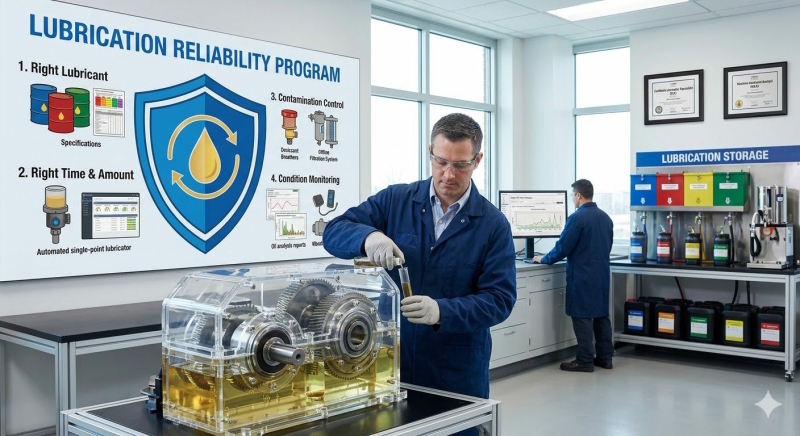
Lubrication reliability is the practice of ensuring the right lubricant reaches the right machine point, in the right quantity, at the right time, and in the right condition. It sits at the intersection of reliability engineering, condition monitoring, and maintenance best practice.
According to industry research, up to 70% of all bearing failures are directly or indirectly linked to lubrication-related causes - including contamination, incorrect viscosity, over- or under-greasing, and lubricant degradation. For maintenance decision-makers, the business case is unambiguous:
- Reduced unplanned downtime and emergency repair costs
- Extended service life of rotating and reciprocating equipment
- Lower lubricant consumption through reduced waste and contamination
- Improved compliance with HSE and environmental regulations
- Stronger OEE (Overall Equipment Effectiveness) across your asset base
Lubrication Reliability is not a peripheral concern - it is foundational to any serious asset management or predictive maintenance strategy.
The Six Pillars of an effective Lubrication Reliability programme
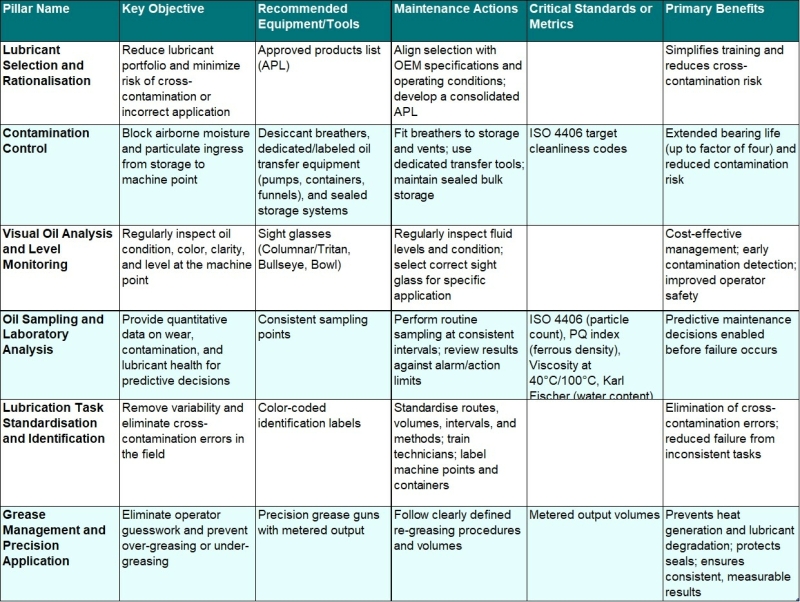
A robust lubrication reliability programme rests on six interconnected pillars. Each must be addressed to achieve sustainable, measurable results.
1. Lubricant Selection and Rationalisation
Many industrial sites operate with an unnecessarily large range of lubricant products - increasing the risk of cross-contamination and incorrect application. A formal lubricant selection process, aligned with OEM specifications and operating conditions, reduces your lubricant portfolio and simplifies training. Work with your lubricant supplier to develop a consolidated approved products list (APL) for your facility.
2. Contamination Control - from storage to machine point
New oil is rarely clean enough to use straight from the drum. Contamination enters the lubrication system at every stage - from storage and handling, through transfer, to the machine sump itself. Effective contamination control requires:
- Desiccant breathers fitted to storage tanks, drums, and reservoir vents to block airborne moisture and particulate ingress
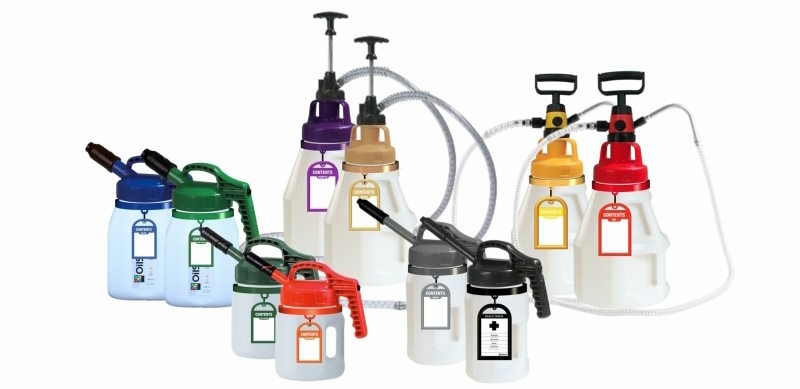
- Dedicated, labelled oil transfer equipment (pumps, containers, funnels) to prevent cross-contamination
- Sealed, clearly identified bulk storage systems in a dedicated lube room environment
- Target cleanliness codes ( ISO 4406 ) set and monitored for each critical asset
Achieving and maintaining low particle counts is one of the highest-value interventions in any lubrication reliability programme. Studies consistently show that reducing oil cleanliness from ISO 20/18/15 to 16/14/11 can extend bearing life by a factor of four or more.
3. Visual Oil Analysis and Level Monitoring
You cannot manage what you cannot see. Visual oil analysis - the practice of regularly inspecting oil condition, colour, clarity, and level at the machine point - is one of the most cost-effective and accessible tools in the maintenance professional's arsenal.
Sight glasses are the primary tool for visual oil analysis, and selecting the correct type for each application is an important decision. There are three principal designs, each with distinct advantages:
- Columnar sight glasses (sight tubes or sight gauges): These provide a straight, cylindrical viewing path, making them ideal for applications where fluid levels experience greater fluctuations. They can be mounted vertically or horizontally and are particularly well-suited for installation at drain ports or below the oil level. Their 3D design enables accurate fluid level measurement across a range of operating conditions.
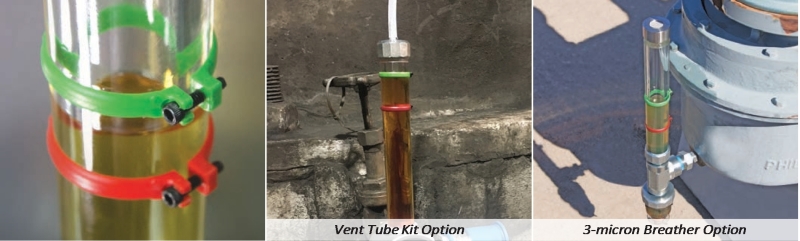
- Bullseye sight glasses: With their circular, concentric-ring design, bullseye glasses offer a wide field of view and quick visual assessment of fluid level changes - a strong choice for high-visibility applications.
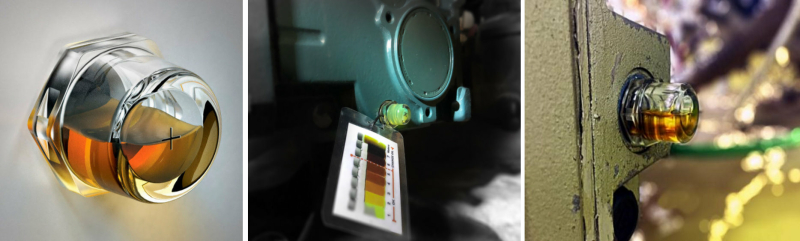
- Bowl sight glasses: The curved bowl design provides a magnifying effect, enabling detailed inspection of fluid dynamics, colour, and clarity — particularly useful where early contamination detection is a priority.
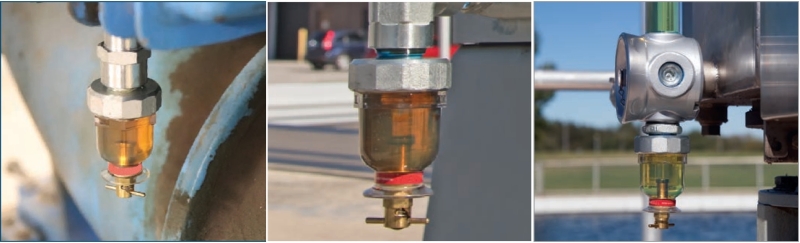
For many industrial gearboxes, hydraulic systems, and turbine applications, columnar sight glasses made from Tritan - a high-performance copolyester - are increasingly preferred over traditional glass. Tritan offers exceptional optical clarity, impact resistance, chemical resistance, and thermal stability, significantly reducing the risk of field breakage and improving operator safety.
4. Oil Sampling and Laboratory Analysis
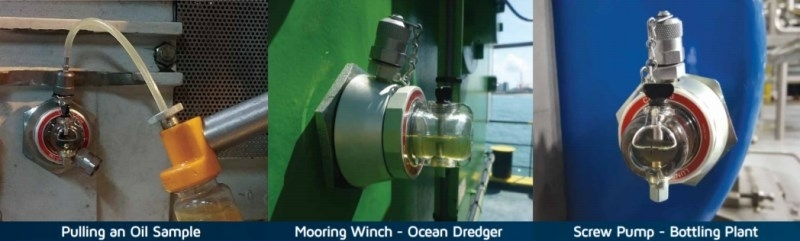
Visual inspection tells you what is visible, but oil analysis tells you what is not. A structured oil sampling programme, using consistent sampling points and intervals, provides quantitative data on wear metals, contamination levels, additive depletion, and viscosity. This data enables predictive maintenance decisions before failure occurs.
Key tests to include in a routine programme are: particle count (ISO 4406), ferrous density (PQ index), viscosity at 40°C and 100°C, water content (Karl Fischer), and elemental analysis (ICP-OES). Review results against established alarm and action limits for each asset, and ensure findings are acted upon by the maintenance team.
5. Lubrication Task Standardisation and Identification
Inconsistent lubrication tasks are a significant source of failure. Standardising lubrication routes, volumes, intervals, and methods - and ensuring all technicians are trained to carry them out correctly - removes variability from the process. Clear colour-coded identification labels on both machine lubrication points and lubricant containers are a simple but powerful tool for eliminating cross-contamination errors in the field.
6. Grease Management and Precision Application
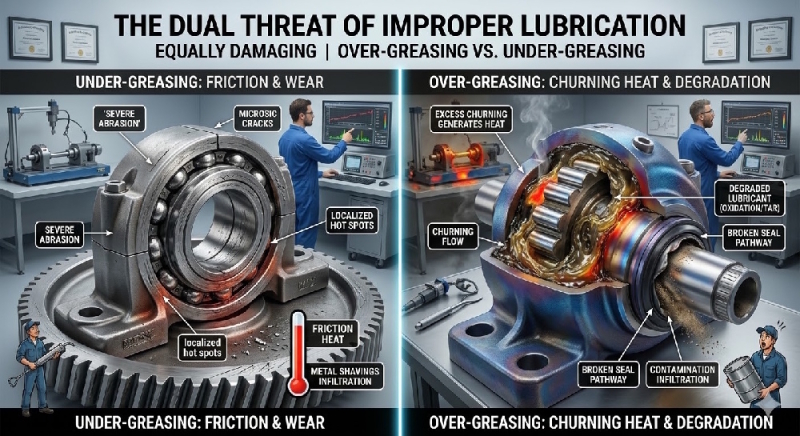
Over-greasing is as damaging as under-greasing. Excess grease churning generates heat, degrades the lubricant, and can breach seals, creating a pathway for contamination. Precision grease guns with metered output, paired with clearly defined re-greasing procedures and volumes, eliminate operator guesswork and deliver consistent, measurable results.
Common Lubrication Reliability mistakes to avoid
Even experienced maintenance teams fall into predictable traps. The most damaging include:
- Treating lubrication as a low-skill task and failing to invest in operator training
- Relying on time-based oil change intervals rather than condition-based decisions
- Storing lubricants in uncontrolled environments, exposing them to moisture, temperature extremes, and contamination before use
- Using inadequate or poorly maintained sight glasses, making accurate oil level assessment impossible
- Failing to track and analyse oil sample data over time, missing early warning trends
- Not aligning lubrication tasks with the overall maintenance management system ( CMMS )
How to implement a Lubrication Reliability programme: A step-by-step approach
Implementing lubrication reliability does not require a complete overhaul of your maintenance operation. A structured, phased approach delivers measurable results at each stage.
- Step 1 - Conduct a lubrication audit: Assess your current lubricants, storage conditions, transfer equipment, machine identification, and sampling practices against best-practice benchmarks.
- Step 2 Prioritise critical assets: Focus initial improvements on assets where failure has the greatest financial, safety, or production impact.
- Step 3 - Upgrade your lube room: Install desiccant breathers, labelled storage, and dedicated transfer equipment. Establish cleanliness standards for incoming lubricants.
- Step 4 - Fit appropriate sight glasses and sampling valves: Ensure every critical asset has a reliable means of visual oil level inspection and representative sampling.
- Step 5 - Establish an oil analysis programme: Define sampling intervals, select a reputable laboratory, and set alarm limits for each asset type.
- Step 6 - Train your team: Invest in formal lubrication technician training. A well-trained team is the most reliable component in any lubrication programme.
- Step 7 - Measure and improve: Track KPIs such as lubricant consumption, number of oil sample alarms, Mean Time Between Failures ( MTBF ), and unplanned downtime incidents linked to lubrication.
Future trends in Lubrication Reliability
The lubrication reliability discipline is evolving rapidly, driven by digitalisation, sustainability imperatives, and advances in sensing technology. Key trends to watch include:
- Integrated condition monitoring pods: Devices such as the Luneta Condition Monitoring Pod (CMP) combine sight glass functionality with in-line oil condition sensors, delivering real-time data on temperature, cleanliness, and moisture — moving from periodic inspection to continuous monitoring.
- IIoT-connected lubrication systems: Automated lubrication systems integrated with CMMS platforms enable predictive replenishment and remote condition tracking across large, geographically dispersed asset bases.
- Sustainable lubricants and extended drain intervals: Condition-based oil change decisions, underpinned by reliable analysis data, are replacing arbitrary calendar-based intervals - reducing lubricant consumption, disposal costs, and environmental impact.
- Advanced materials in sight glass technology: High-performance polymers such as Tritan are increasingly replacing traditional glass in industrial sight gauges, improving durability, chemical resistance, and operator safety across demanding process environments.
Conclusion: Lubrication Reliability is a strategic investment
Lubrication reliability is not a cost centre - it is a profit driver. Organisations that treat lubrication as a strategic discipline, supported by the right products, processes, and people, consistently outperform their peers on equipment availability, maintenance cost, and asset life.
From selecting the correct sight glass for accurate oil level monitoring, to implementing a structured oil analysis programme and contamination control strategy, every element of a well-designed lubrication reliability programme contributes to a safer, more productive, and more profitable operation.
The question is not whether you can afford to invest in lubrication reliability. The question is whether you can afford not to.
Frequently Asked Questions (FAQ)
What is lubrication reliability in maintenance?
Lubrication reliability is the discipline of ensuring that the correct lubricant is delivered to each machine point in the right quantity, at the right time, and in the right condition. It encompasses lubricant selection, contamination control, oil level monitoring, oil analysis, task standardisation, and technician training - all working together to maximise machine uptime and service life.
What are columnar sight glasses used for in industrial maintenance?
Columnar sight glasses - also known as sight tubes or sight gauges - are transparent cylindrical devices fitted to equipment sumps, tanks, and pipelines to allow technicians to visually monitor oil or fluid levels, clarity, and condition. They are particularly suited to applications with greater fluid level fluctuations and can be mounted at the drain port or anywhere below the oil level. Tritan columnar sight glasses are increasingly preferred in industrial settings for their durability, chemical resistance, and optical clarity.
How does contamination control improve machine reliability?
Contamination - particularly particulate matter and moisture - is the primary cause of premature bearing and gear failure in lubricated machinery. Effective contamination control, using desiccant breathers, clean transfer equipment, sealed storage, and routine oil analysis, reduces particle counts and moisture levels in the lubricant. Lower contamination levels directly translate to extended component life: reducing particle counts by just a few ISO cleanliness classes can multiply bearing service life several times over.
How often should industrial oil be sampled and analysed?
Sampling frequency depends on the criticality of the asset, the severity of its operating conditions, and the findings of previous analyses. As a general guideline, critical rotating assets such as gearboxes, turbines, and compressors should be sampled every one to three months. Less critical equipment may be sampled quarterly or semi-annually. The key principle is consistency: samples taken from the same point, using the same method, at regular intervals, provide the most meaningful trend data for predictive maintenance decisions.
Take the next step towards Lubrication Reliability excellence
Whether you are starting your lubrication reliability journey or looking to optimise an existing programme, Lubretec provides the specialist products and expertise to help you achieve measurable, lasting results. From premium Tritan columnar sight glasses and desiccant breathers to oil sampling systems and lubrication identification solutions, our range is designed specifically for the B2B maintenance and reliability sector.

Contact our lubrication reliability specialist today to discuss your specific requirements, request a free site assessment, or explore our full product range at lubeworx.com. Your machines - and your bottom line - will thank you.