Step 10 of 10: Knowledge Management
CAPTURE THE KNOWLEDGE.
Sustain the Reliability.
CAPTURE THE KNOWLEDGE.
Sustain the Reliability.
Nine steps build a Lubrication Reliability™ system. The tenth makes sure the people running it understand why every one of those steps matters - and keeps mattering after the original team has moved on.
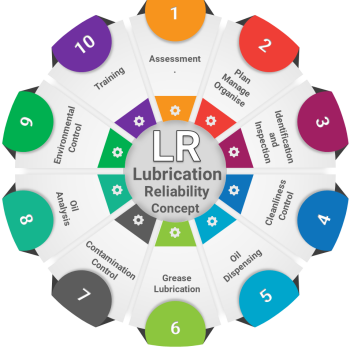
Step 9 controlled the environment around your lubrication programme. Step 10 controls the knowledge inside it, because a controlled environment, a benchmarked plan and precision equipment are only as reliable as the people applying them. Without structured training and documentation, even a well-built system quietly drifts back to guesswork the moment an experienced technician retires, transfers, or takes a day off.
A system without knowledge is a system waiting to fail.
STEP 1 THROUGH STEP 9
EVERY PREVIOUS STEP DEPENDS ON THE PEOPLE WHO RUN IT.
Knowledge Management isn't a training add-on bolted on at the end; it's what keeps Steps 1–9 alive after the assessment is filed, the labels are printed, and the equipment is installed.

"How do I ensure knowledge isn't lost when people leave?"
Document everything in standard operating procedures (SOPs) and a knowledge base. Use one-point lessons, visual guides, and skill assessments. For key roles, certification as a Machine Lubrication Technician (MLT) or Machine Lubricant Analyst (MLA) turns individual know-how into organisational continuity.
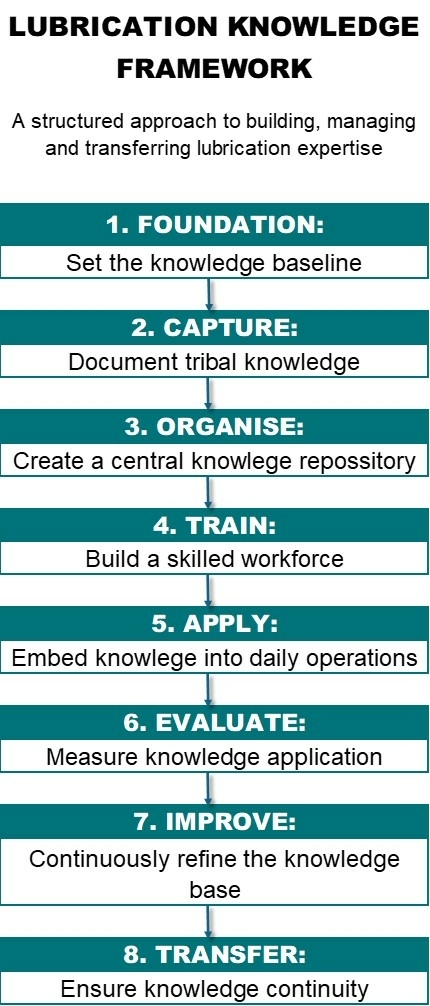
Establish a Lubrication Knowledge framework
A structured framework - including SOPs, job aids, and reference guides - builds consistency:
- Select the right lubricant
- Receive and store it correctly
- Apply it with precision
- Control contamination
- Monitor oil condition and analyse results
- Dispose or recycle responsibly
By documenting each lifecycle stage, you create clarity and accountability across teams.
1. TRAIN AT EVERY LEVEL
Training has to be layered, not one-size-fits-all:
Provide basic lubrication training for all maintenance and operations staff
Upskill key individuals to MLT and MLA certification
Run task-based refresher training (‘brain and train’) sessions - to reinforce core skills
Use Lubrication Management Software to centralise procedures and learning resources
"THE BEST WEAPON AGAINST POOR RELIABILITY IS KNOWLEDGE"
"THE BEST WEAPON AGAINST POOR RELIABILITY IS KNOWLEDGE"
2. TRACK PROGRESS, DON'T ASSUME IT
Benchmark your programme against best-practice standards such as ICML 55.1 and ISO 55001 using tools like Ascend™. Progress through defined lifecycle stages and confirm improvement with metrics and continuous audits; the same discipline Step 1's assessment started with, now applied on an ongoing basis.
Making Sense of ICML 55®
In this video, Paul Hiller (Marketing Manager) of the International Council of Machinery Lubrication discusses the ICML 55 standard and how it works for you.
3. BUILD A CULTURE, NOT JUST A PROGRAMME

Training alone doesn't stick; you need behaviour change. Make precision lubrication part of "the way we do things here":
- Appoint a Lubrication Programme Leader to own training and compliance
- Share wins - downtime reduced, costs saved - to build commitment
- Embed feedback loops through regular reviews, audits and knowledge sharing
SELF-ASSESSMENT
Is your lubrication knowledge under control?
- Do SOPs and job aids exist for every stage of the lubricant lifecycle?
- Could a new hire find the right procedure without asking a colleague?
- Are key roles progressing toward MLT / MLA certification?
- Is training refreshed regularly, not delivered once and forgotten?
- Is your programme benchmarked against ICML 55.1 / ISO 55001?
- Is there a named owner accountable for lubrication training and compliance?
- Are wins and lessons actively shared, not just recorded?
If you can't answer "yes" consistently, your knowledge isn't yet under control and everything upstream in Steps 1–9 is one retirement away from drifting.
HOW THIS FITS INTO LUBRICATION RELIABILITY™
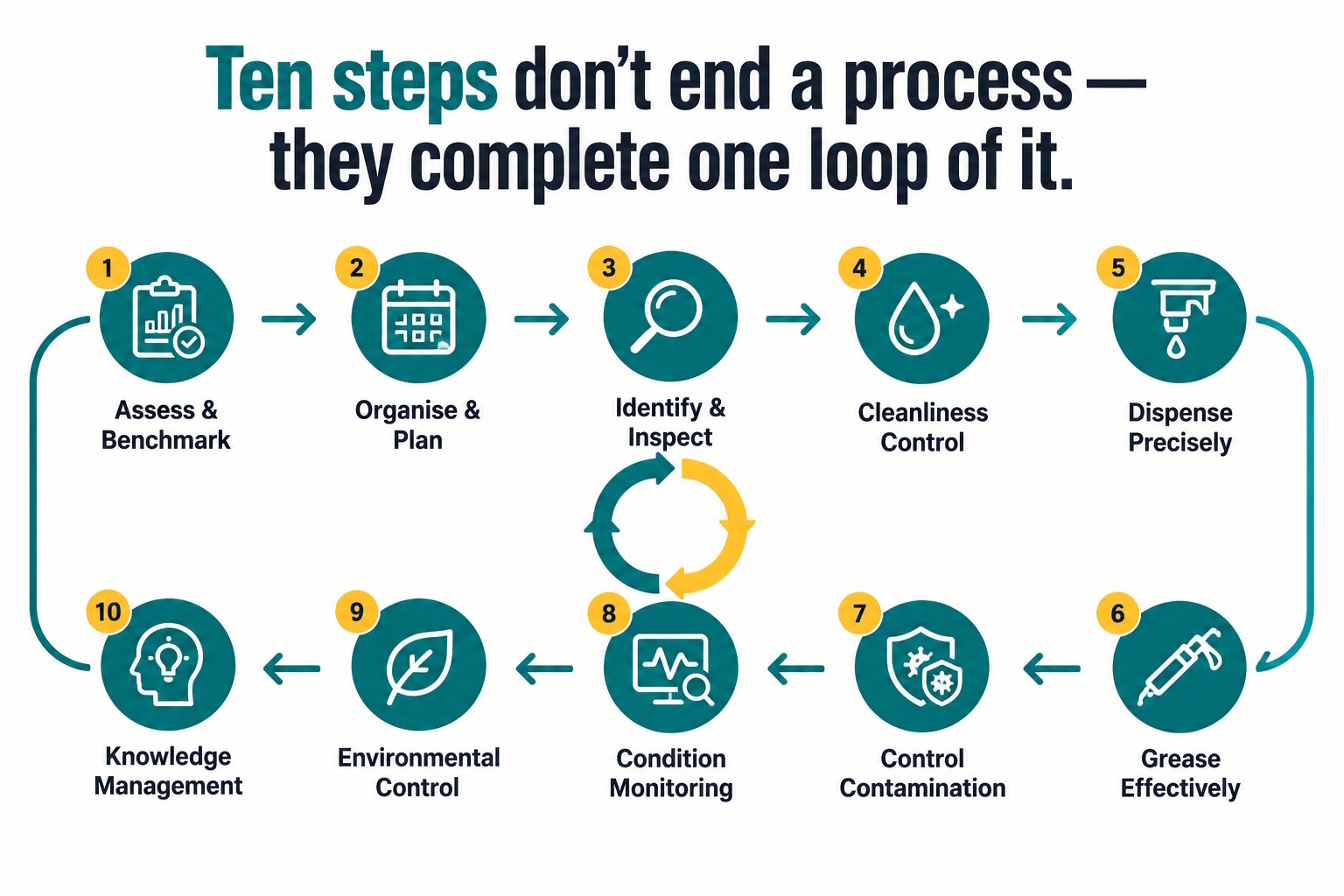
Steps 1–9 build and protect the system. Step 10 makes sure the people running it understand it well enough to sustain it - and to reassess, replan and re-benchmark it as conditions, equipment and teams change.
GET THIS STEP RIGHT, AND STEP ONE'S NEXT ASSESSMENT STARTS FROM A STRONGER BASELINE THAN THE LAST TIME
Ready to build lubrication expertise?
Lubretec can help you design and deliver a robust knowledge management strategy, including training programmes, certification pathways, and documentation tools that keep all ten steps working together.
Contact us today to elevate your lubrication team's skills.