ISO 21469: Hygiene Requirements for Lubricants with Incidental Product Contact
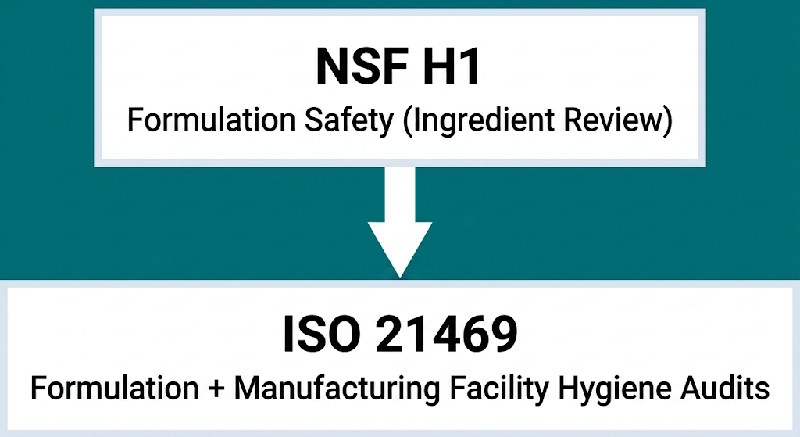
In food, beverage, pharmaceutical, cosmetics, and animal feed manufacturing, lubricant contamination poses a direct risk to consumer safety. While the well-known NSF H1 registration certifies that a lubricant’s formula is safe for incidental food contact, ISO 21469 takes safety a step further by certifying the entire manufacturing, handling, and packaging process of the lubricant itself.
What is ISO 21469?
ISO 21469 is an international standard that specifies hygiene and safety requirements for the formulation, manufacture, use, and handling of lubricants where incidental contact with products (such as food or pharmaceuticals) can occur.
Unlike standard food-grade registrations that only review ingredient chemical composition, ISO 21469 requires an independent, third-party facility audit to guarantee that the manufacturing plant maintains strict hygienic controls against chemical, physical, and biological cross-contamination.

ISO 21469 vs. NSF H1: Key Differences
| Feature | NSF H1 Registration | ISO 21469 Certification |
| Primary Focus | Ingredient formulation compliance | Full lifecycle hygiene & manufacturing practices |
| Facility Audit | Not required | Mandatory annual third-party plant audits |
| Risk Assessment | Basic toxicology review | Comprehensive HACCP-based risk assessment |
| Contamination Prevention | Focuses on end-product composition | Prevents chemical, physical, and biological contamination during production |
| Re-certification | Label and formulation review | Annual facility re-audit and continuous quality tracking |
Why ISO 21469 matters for Plant Maintenance
- Complete Traceability & Safety: Ensures that the food-grade lubricant leaving the factory has not been cross-contaminated by non-food-grade chemicals or foreign particles during blending or packaging.
- HACCP & HARPC Alignment: Integrates seamlessly into a food processing facility’s Hazard Analysis Critical Control Point (HACCP) system, simplifying internal and external food safety audits (e.g., BRCGS, IFS, FSSC 22000).
- Audit Readiness: Utilizing ISO 21469 certified lubricants provides documented assurance to retail and regulatory auditors that proactive contamination controls are enforced throughout the supply chain.