Visual Condition Monitoring: The Power of the Operator Walkdown
A daily glance at a Luneta Sight Glass reveals problems before they cause catastrophic failure.
In the world of industrial machinery reliability, over 50% of premature component failures are lubrication-related. While advanced laboratory diagnostic tools provide critical baseline data, they often capture problems after wear has already started. The most cost-effective, immediate line of defense is right in front of your team: Visual Condition Monitoring.
By making proactive inspection a mandatory part of every operator's daily route, your facility can catch abnormal machine conditions weeks before functional failure occurs. Best of all, this practice requires zero shutdowns—keeping your production line safely moving while fully protecting capital assets.
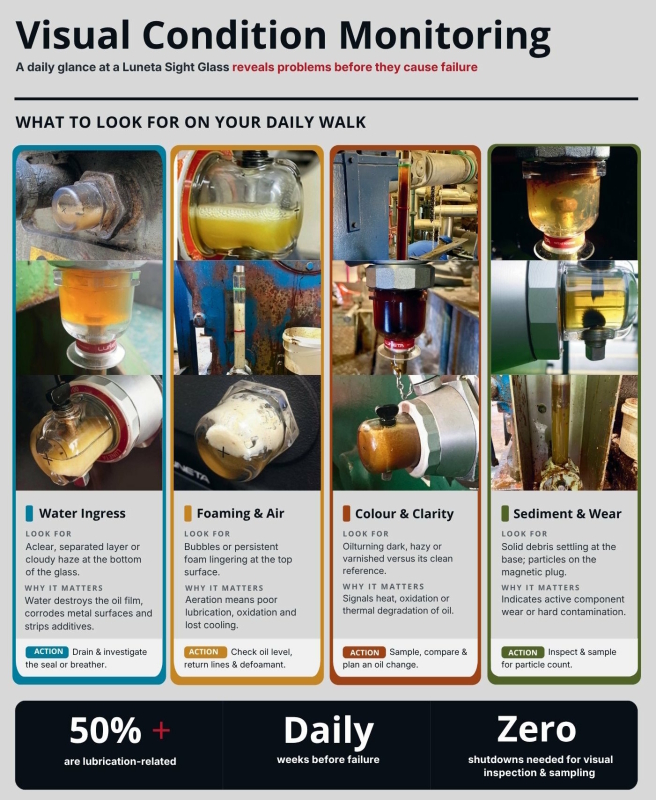
WHAT TO LOOK FOR ON YOUR DAILY WALK
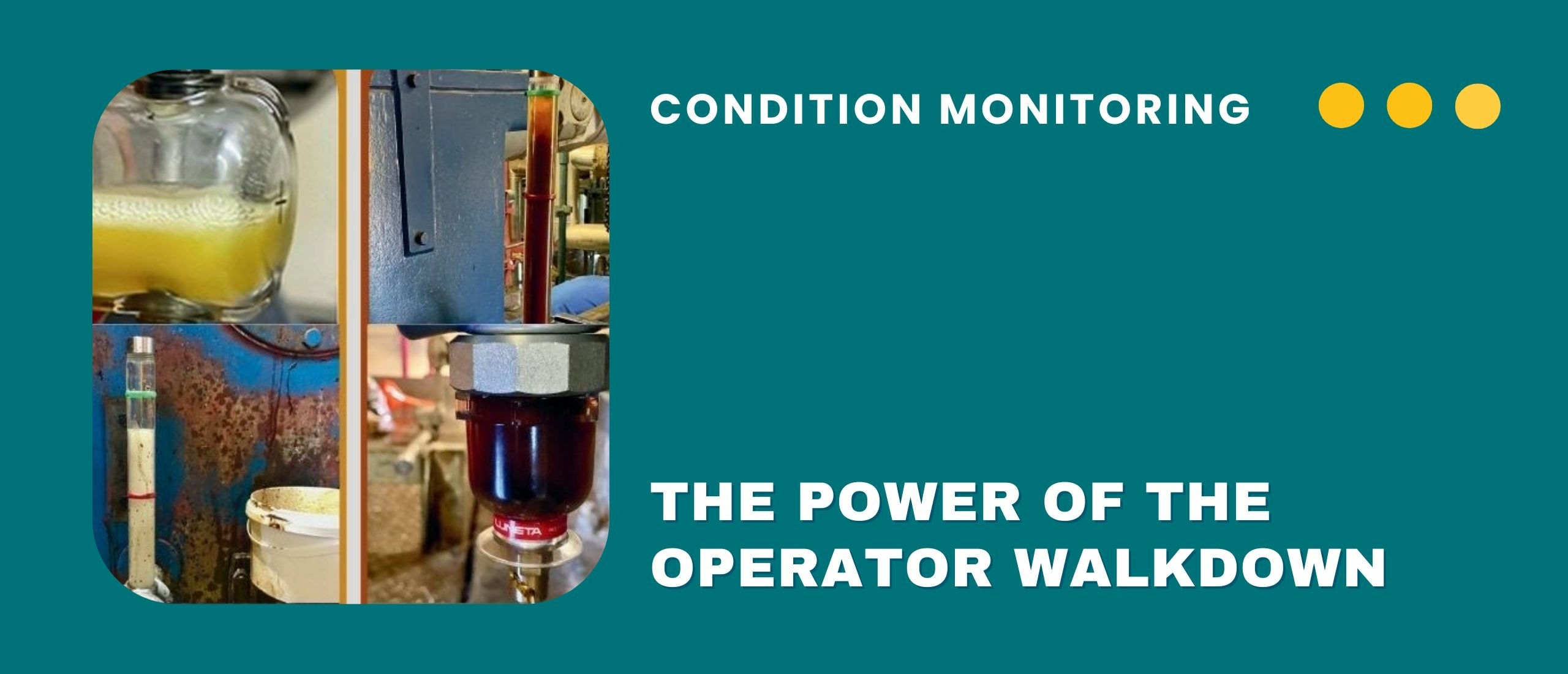
1. Water Ingress
LOOK FOR: A clear, completely separated layer or a cloudy, milky haze resting at the bottom of the sight glass.
WHY IT MATTERS: Water is public enemy number one for machinery lubricants. It rapidly destroys the oil film separating moving metal parts, corrodes internal surfaces, and aggressively strips away vital protective additives.
ACTION: Immediately drain the accumulated water from the bottom of the bowl and investigate the system's seals or desiccant breather for faults.
2. Foaming & Air
LOOK FOR: Entrained air bubbles moving through the fluid or a persistent foam layer lingering at the top oil surface.
WHY IT MATTERS: Severe aeration means poor, unstable lubrication, accelerated oil oxidation, and a significant loss in thermal cooling capabilities.
ACTION: Check the machine's current oil level, inspect return lines for structural air leaks, and evaluate the need for a defoamant additive package.
3. Colour & Clarity
LOOK FOR: Oil that has turned noticeably dark, hazy, opaque, or is showing signs of early varnish compared to its original clean reference standard.
WHY IT MATTERS: A dramatic shift in transparency or color signals extreme operating heat, heavy oxidation, or serious thermal degradation of the oil chemistry.
ACTION: Draw a sample, compare it side-by-side with a clean reference oil sample, and proactively plan an upcoming oil change.
4. Sediment & Wear
LOOK FOR: Heavy solid debris settling at the base of the sight glass or fine metallic wear particles clustered on the integrated magnetic plug.
WHY IT MATTERS: Visible sediment and magnetic debris are definitive indicators of active, destructive component wear or severe, external hard contamination entering the system.
ACTION: Perform a thorough physical inspection and pull an immediate oil sample for an formal ISO particle count.
Key Takeaways for the Reliability Team:
- 50%+ of failures are lubrication-related.
- Daily glances catch problems weeks before a breakdown.
- Zero production shutdowns are required for routine visual inspections.
Make visual inspection part of every route. See more. Protect more. Spend less.