Step 6 of 10: Grease Effectivity

GREASE EFFECTIVITY
GREASE EFFECTIVITY
Oil can be filtered clean again. Grease, once contaminated, generally can't be. Step 6 controls the one lubricant type where a handling mistake is often permanent.
Oil can be filtered clean again. Grease, once contaminated, generally can't be. Step 6 controls the one lubricant type where a handling mistake is often permanent.
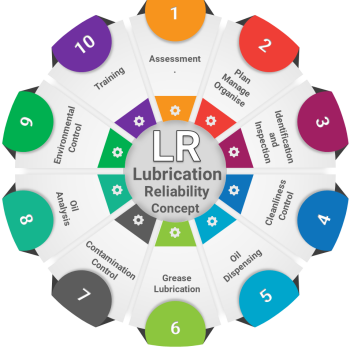
PRIMARY RISK
Contamination & over/under-application
GOVERNS
Storage, handling, application volume
FEEDS INTO
FEEDS INTO
Step 7 - Contamination Control
WHY IT MATTERS
GREASE IS LESS FORGIVING THAN OIL
Step 5 controlled precision transfer for oil. Grease plays by different rules: once contaminated, it's difficult - often impossible - to clean. That makes correct handling essential rather than optional. Many lubrication failures trace back to poor grease management: contamination, over-application, or the wrong tool for the job.
Right grease · right quantity · right time · right location
Miss one, and bearing life, reliability and
maintenance cost ALL suffer.
Want to understand what grease actually is and when to use?
Read our background guide.
WHY GREASE LUBRICATION IS SO OFTEN DONE WRONG
Grease-related failures rarely come from bad grease. They come from bad practice: guessing at quantity, greasing on a fixed calendar regardless of how the equipment is actually running, mixing incompatible products, or letting dirt into the gun before it ever reaches the bearing.
Because grease can't be circulated, sampled or filtered the way oil can, mistakes are locked in place. A bearing that's over-greased will run hot and churn the grease until it breaks down. A bearing that's under-greased will run dry and wear metal-on-metal. Both look identical on a maintenance checklist - "lubrication performed" - and both shorten bearing life.
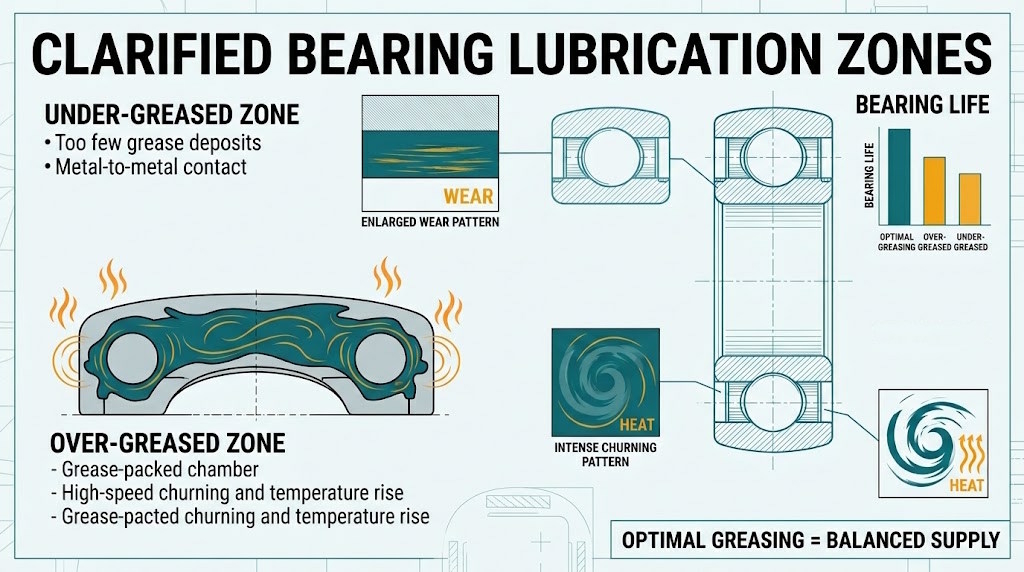
"Under-greased" vs "Over-greased" bearing cross-section
Treating grease lubrication as "applying grease" is exactly how these failures happen. Treating it as a controlled process is how they stop.
"HOW DO I KNOW I'M APPLYING THE RIGHT AMOUNT OF GREASE?"
THIS IS THE MOST COMMON QUESTION WE HEAR
Reliable grease lubrication rests on five controls working together. Miss one, and the others can't compensate for it.

Know
the point
the point
Correct component, clearly identified

Correct
grease
grease
Specification and compatibility

Correct
quantity
quantity
Measured, not guessed

Correct
frequency
frequency
Set by conditions, not the calendar

Clean
application
application
Right tools, contamination-free
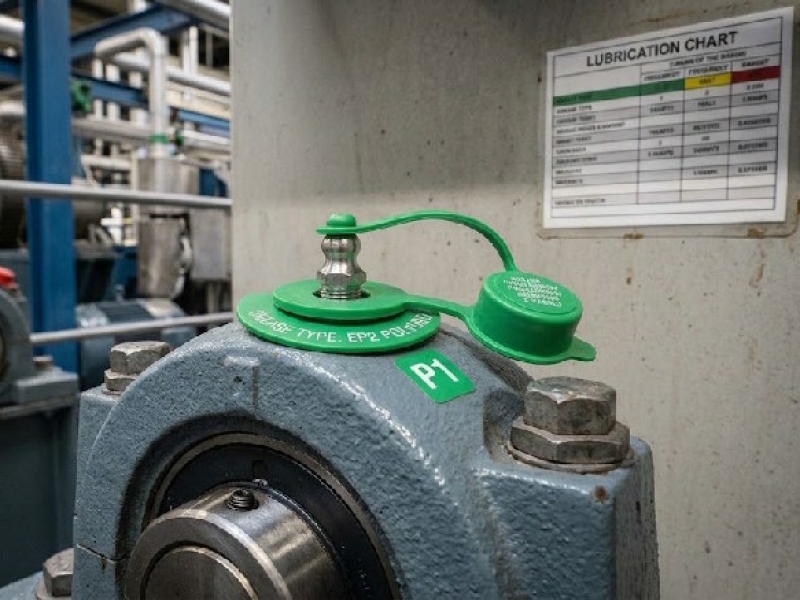
1. Know the lubrication point
Before any grease is applied, the lubrication point needs to be unambiguous for whoever is doing the job, on whichever shift. That means:
- Every grease point is linked to a specific bearing or component, not "greased by feel" or from memory of where it usually is
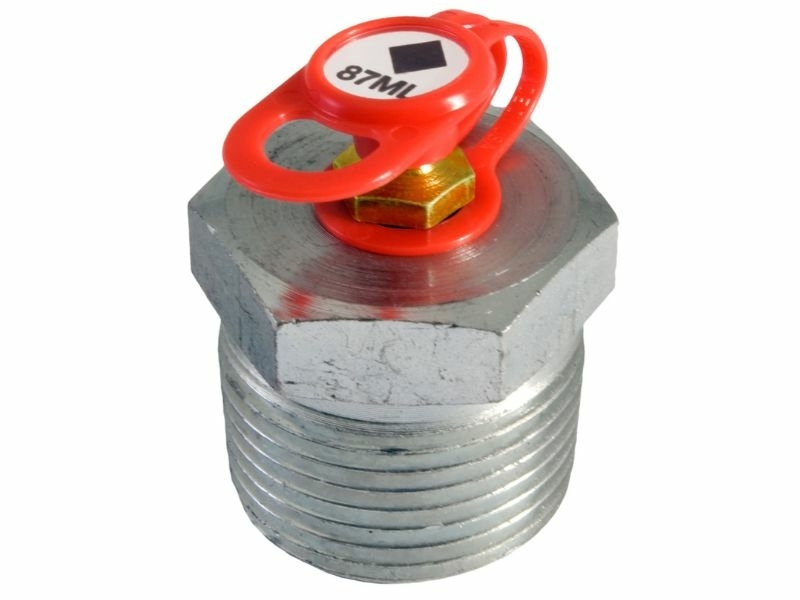
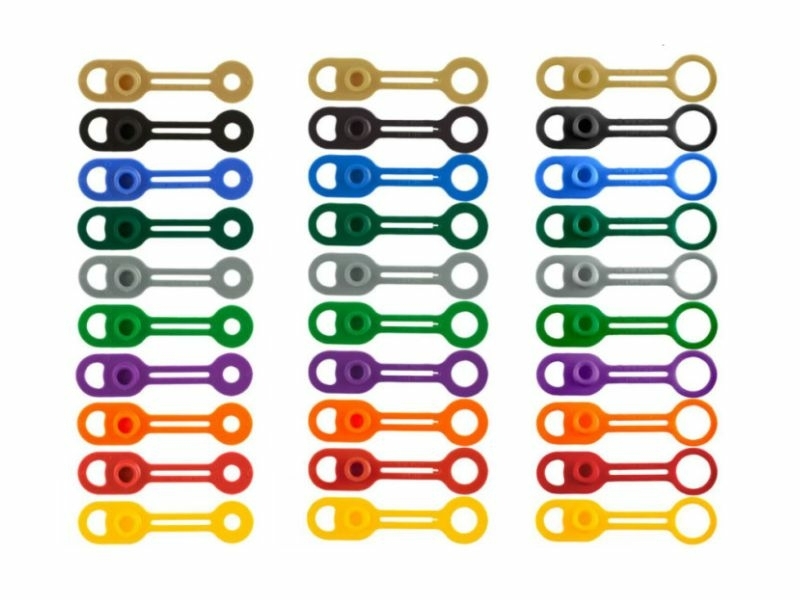
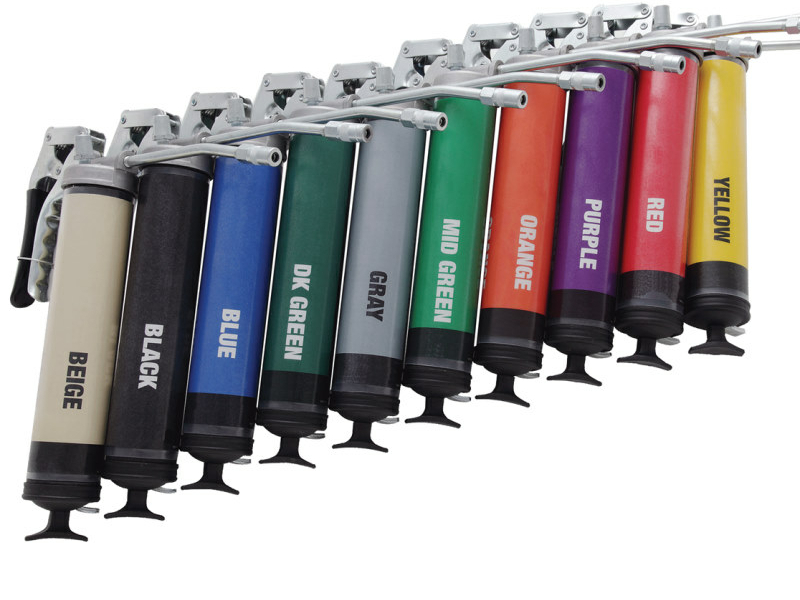
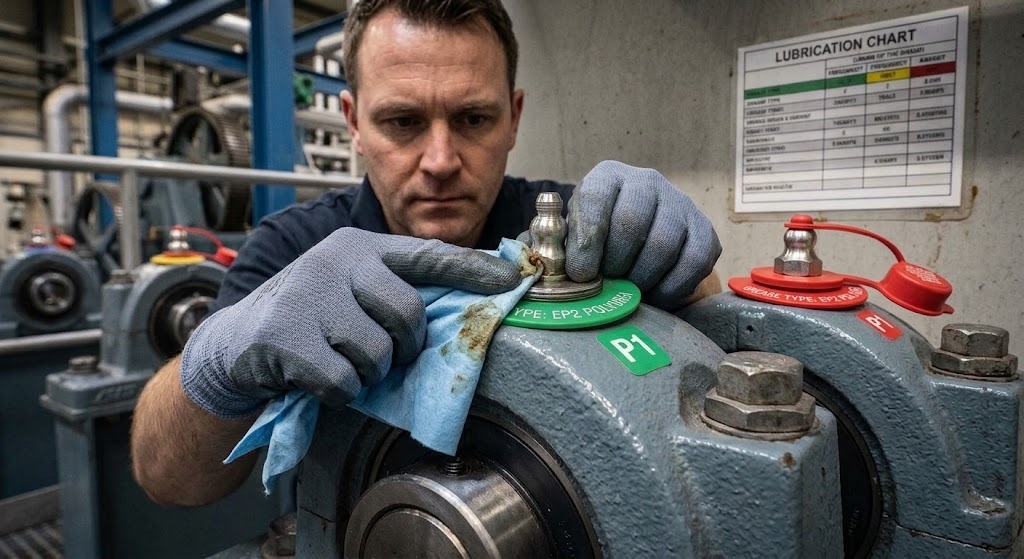
- Grease nipples and fittings are clearly labelled and identified, ideally colour-coded to match the grease type they take
- Points that are hard to access or easy to confuse with a neighbouring fitting are flagged and, where possible, relocated or grouped
This is a direct continuation of the identification work in Step 3. Without it, everything that follows - correct grease, correct quantity, correct interval - depends on someone getting the point right from memory, which doesn't hold up across shifts and staff turnover.
2. Use the correct grease
Not all greases are interchangeable, even when they look identical in the gun. Thickener type, base oil viscosity and additive package all need to match the application - load, speed, temperature and environment.
- Select grease based on specification, not on what's already open in the store
- Never assume two greases with similar colour or consistency are compatible; mixing incompatible thickeners can destroy the grease structure and leave a bearing effectively unlubricated
- Keep grease clearly identified from storage through to the gun; the same labelling discipline as Step 3, carried through to application
- Where multiple grease types are in use, minimise variants wherever technically possible — fewer types means fewer opportunities for mix-ups
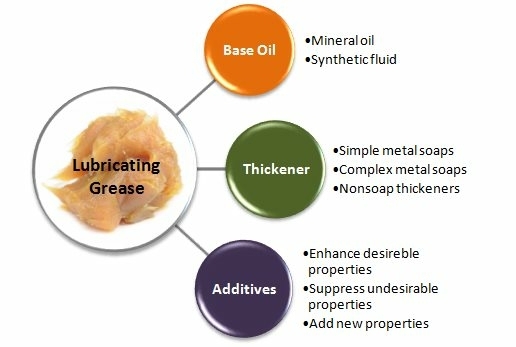
"Can I just use whatever grease is closest?"No. This is one of the most common causes of avoidable bearing failure. A grease that looks and feels identical can have completely different thickener chemistry. Mixed incompatible greases can soften, separate, or lose their ability to hold oil at the bearing surface. If you're not certain two greases are compatible, don't combine them.
3. Control the Quantity
More grease is not better lubrication; it's a common and costly misunderstanding. Over-greasing forces excess grease into seals, raises internal pressure and generates heat through churning. Under-greasing starves the bearing of film thickness exactly where it's needed. Both accelerate failure; neither looks wrong from the outside.
"How do I know I'm applying the right amount of grease?"
This is the question we hear most often on-site. The honest answer is: by calculation and measurement, not by feel or a fixed number of gun strokes. Bearing size, speed and housing design all determine the correct re-grease quantity, and that figure should be documented per lubrication point.
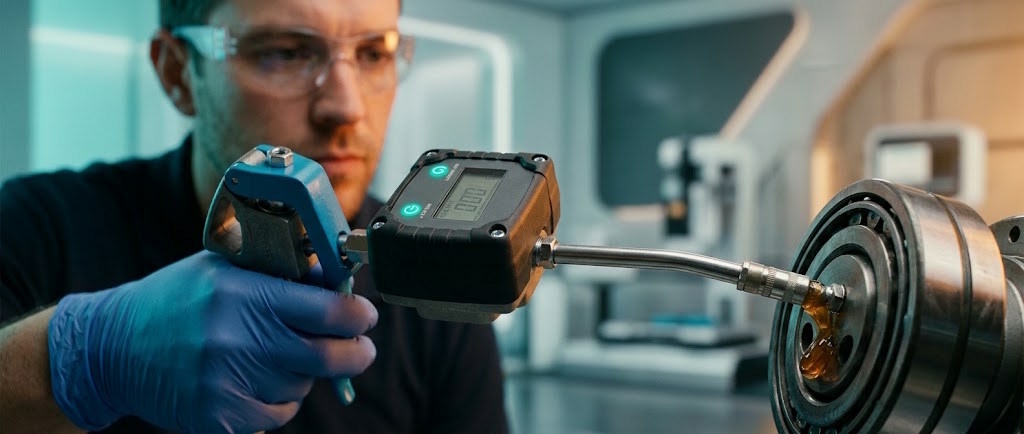
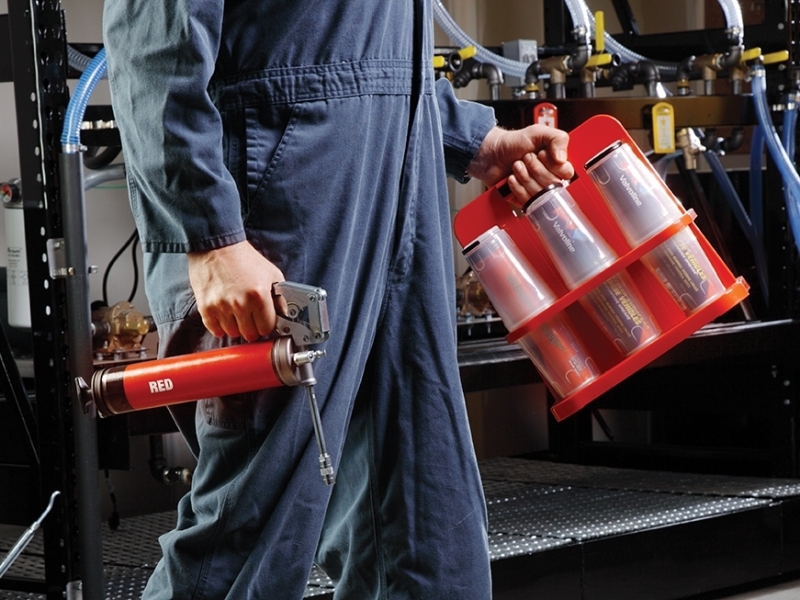
Solution: measure, don't guess. Digital grease meters and metered grease guns deliver a precise, repeatable volume every time, removing operator-to-operator variation. For high-value or hard-to-reach assets, automatic lubricators maintain the correct quantity continuously, without relying on someone remembering to do the round.

4. Control the frequency
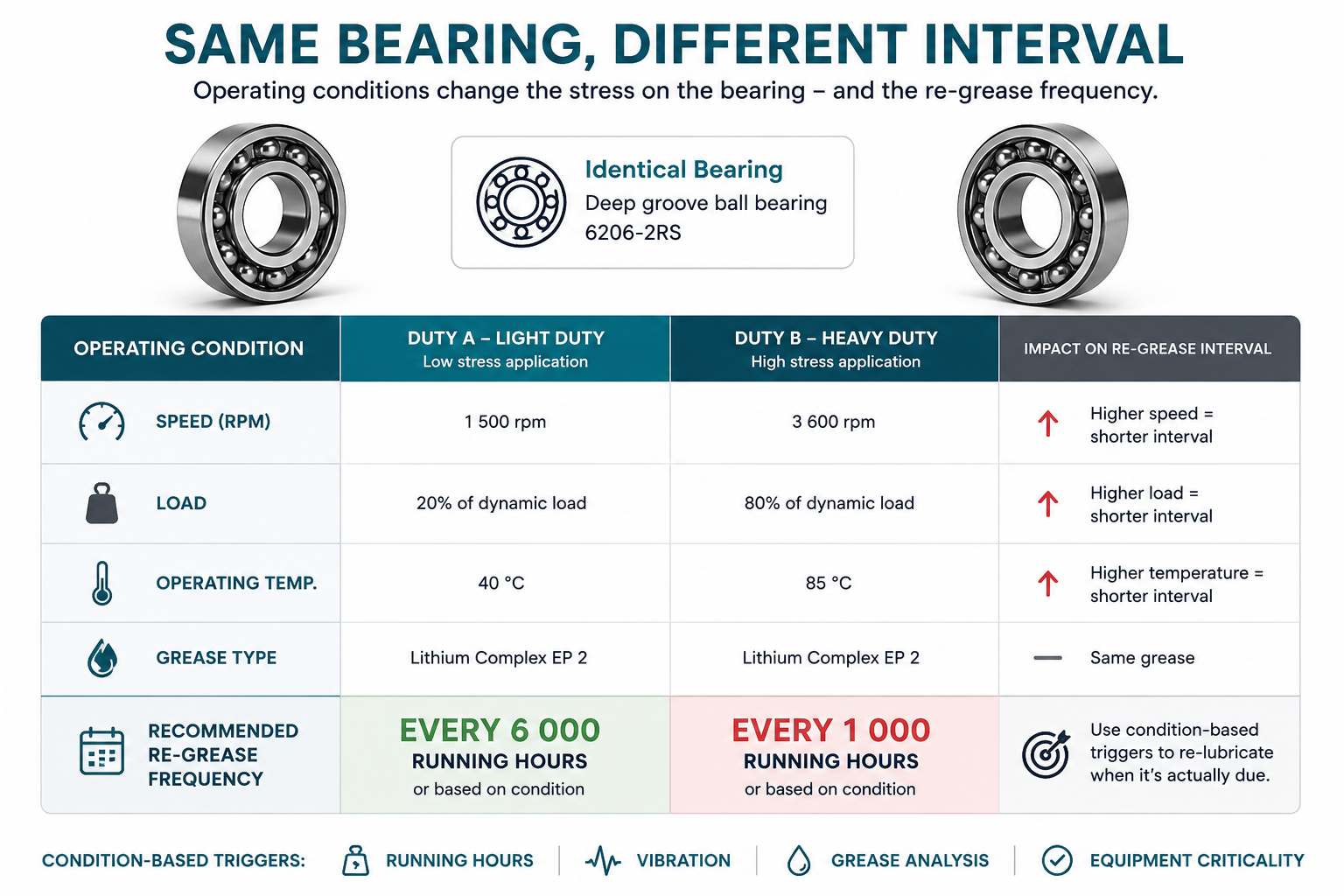
Calendar-based greasing - "every bearing, every month" - treats every asset the same regardless of how hard it's actually working. It's simple to schedule, but it's rarely correct.
Re-lubrication frequency should be set per lubrication point, based on:
- Speed and load the bearing is running under
- Operating temperature
- Environmental exposure - dust, moisture, washdown, contamination risk
- Re-lubrication frequency should be set per lubrication point, based on:
Two identical bearings on different duties can need very different intervals. Where equipment criticality and cost justify it, move from fixed calendar intervals towards condition-based triggers; using running hours, vibration data or grease analysis to confirm when re-lubrication is actually due, rather than assuming it.
5. Apply grease correctly
Even the right grease, in the right quantity, at the right interval, can be undermined by poor application technique.
- Use a grease gun and connector matched to the fitting - a poor connection is a direct route for contamination to enter the bearing
- Clean the grease fitting before connecting the gun. Dirt sitting on top of a nipple gets pushed straight into the bearing on the next stroke
- Follow a controlled, repeatable application method for every point - not whatever's quickest that day
- Where duty, access or criticality justify it, consider metered or automatic lubrication to standardise the process
BEST PRACTICES FOR GREASE APPLICATION
- Wipe every fitting clean before connecting the gun - no exceptions
- Match connector type to fitting type; don't force an ill-fitting coupler
- Apply the documented, measured quantity - not "until it looks greased"
- Use dedicated, labelled guns per grease type to prevent cross-contamination
- Log every application against the lubrication point
PREVENT CONTAMINATION
Grease is unforgiving of contamination because it can't be cleaned once it's applied. Protecting it starts long before the gun touches the bearing:
- Store grease guns, cartridges and bulk containers sealed and off the floor, away from dust and moisture
- Cap and cover fittings and containers whenever they're not in use
- Avoid open scooping or decanting - treat grease transfer with the same closed-system discipline established for oil in Step 5
- Inspect guns and couplers periodically for grease build-up, damaged seals or worn threads that could let contaminants in
This is the same principle that runs through the whole Lubrication Reliability™ programme: contamination excluded at every handling stage, not just checked for afterwards.
BUILT FOR CONSISTENT, CONTROLLED GREASING
Standardising grease application isn't only a training issue; it depends on having the right equipment for the job. Lubretec supports Grease Effectivity with:
Metered
grease gun
grease gun
Consistent, measurable delivery on manual rounds
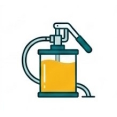
Grease
pump
pump
Controlled bulk transfer without contamination exposure

Digital
grease meter
grease meter
Replace stroke-counting with an accurate, repeatable dose

Grease iden-
tification
tification
Colour-coding carried from storage through to application

Automatic
lubrication
lubrication
For critical or hard-to-reach assets manual rounds can't cover reliably
These tools support the process; they don't replace the discipline behind it. That's our role across all ten steps: helping you build a grease lubrication programme that's controlled and repeatable, not just equipped.
SELF-ASSESSMENT
Is grease actually controlled, or just applied?
- Is bulk grease transfer avoided in favour of cartridge or automated systems where possible?
- Are bulk drums sealed with a proper follower plate and pump - never open-scooped?
- Is grease volume measured with a digital or ultrasonic tool, not judged by feel?
- Is each machine's grease type matched to its actual load, speed and temperature?
- Are grease routes scheduled by equipment criticality, not walked at random?
- Is grease equipment colour-coded to prevent cross-contamination between products?
Grease mistakes rarely get a second chance; a contaminated batch is usually a discarded batch, and an over-greased bearing is already damaged by the time it's noticed.
HOW THIS FITS INTO LUBRICATION RELIABILITY™
① Assess & Benchmark
② Organise & Plan
③ Identify & Inspect
④ Cleanliness Control
⑤ Dispense Precisely
6 Grease Effectively
⑦ Control Contamination
⑧ Condition Monitoring
⑨ Environmental Control
⑩ Knowledge Management
Precision transfer in Step 5 protects the oil in your system.
Long-term benefits of grease reliability
Proper grease practices don't just extend bearing life; they reduce downtime, improve safety, and lower your total cost of ownership.
Ready to optimise your grease lubrication process?
Ready to optimise your grease lubrication process?
Getting grease application right - consistently, across every shift and every lubrication point - is one of the highest-leverage steps in a reliability programme, and one of the easiest to get wrong by default.